




The 4th R

With our schools closed and not knowing exactly when they will be opening, us parents of school aged children that are on the precipice of adding World’s Okayest Homeschool Teacher to our resume this week or at some point soon. Parents, this, while juggling your own job as you work from home, being with your partner at home as they work from home, possibly caring for your parents, and/or caring for newborns or toddlers. Things feel doubled or tripled if you are in the medical field or have been impacted directly by COVID-19. Whew. Take a Breath. Cut yourself some major slack. A lot of grace, patience and kindness, is what I want you to offer yourself and your nervous system. This is a time for holding everything in the world gingerly and gently, including yourself.
About 1.7 million American students are homeschooled, and due to the COVID-19 outbreak, that number is about to get a lot higher, at least temporarily. It’s all going to be ok and it will all get worked out. Parents, start by making a schedule.
As we navigate and structure our school day, I realize that we have on our schedule loads of activities for academic work. Even INcredible links to tour the world famous museums, science experiments, Mo Willems draw along, virtual farm tours, our Houston Zoo, weather classroom from new stations, the virtual tour of the great wall of China, and the list goes on and on. We have even put on our schedules Physical Education with activities such as kids yoga, free dance lessons, streaming dojos, and daily workouts by a PE teacher. I am certain that your schedule will include Reading, wRiting and ‘Rithmetic. I’d like for you add a 4th R to your daily schedule……Regulating Emotions.
No doubt global anxiety is skyrocketing right now. If you're feeling stressed about Covid-19, know that it's possible your kids are too.
Do you ever wonder what some therapists have on their new daily homeschool schedule? Well, what we try to have? Yes, you with your hand up in the back…..the emotional piece. I know, you’re like “whaaaaaa? Another “thing” to do with my kids? I thought you said that I should cut myself some slack?” You totally should. I also want to let you know that being able to diffuse emotions will keep your child from detonating, whether by ex/imploding. Therefore, helping you.
One activity that my children are participating in (and my husband and myself too) is daily journaling. Our kids are watching us and learning about how to respond to stress and uncertainty, so engaging in journaling with them would be extra credit points for sure.
No one is to read their emotive journal without permission. In this way, journaling provides the opportunity for them to:
Explore and identify emotions
Feel anger
Express fear
Examine the pros and cons of something in order to be more decisive
Look more carefully at her thoughts about something after the immediate situation has passed
Gain some insight into her own and other people's motives
See the positives as well as the negatives
Plan out difficult conversations ahead of time
Write out (or draw if the child cannot or has a difficult time writing)
A feelings journal is a great way to help a younger child build an emotional vocabulary. It can be done in a few ways. Your child can identify his/her current emotions, draw a picture and label it, choose a feeling from a feeling poster or wheel to write and draw about or learn a new emotion to draw and write about. I’ve included an emotions wheel that I, like Goldilocks, love to find baby bear’s juuuust the right word for what I am feeling.

Another activity the Atkinson household is adopting is to remember that the power of laughter can be healing. Locate a funny video to watch or share memories you and your family have experienced together. I’m having the girls share a funny video or story or joke with us everyday as part of “school”.
I have asked trusted local friends and colleagues (I’m about to name drop) what activity they would encourage for emotions class.
“Writing letters or note cards to loved ones letting them know how much they mean to you and how much you care about them.” Cheryl Butler, MA, LPC, Owner of True North Counseling Services in The Woodlands
“Play. For children under the age of 9, play is thought to be their natural language. Our children need space to process their emotions through play. Get down on the floor with them; don’t direct the play- allow them to control their play. Try to reflect what they are doing and feeling in order to help them feel understood and connected. Sometimes their play might be sad; don’t try to cheer this up. Instead just reflect what they are feeling. This is the best way for a child to express their emotions and make sense of their world. It’s okay to have more than one emotion at a time; you can be scared, anxious, and grateful for these moments.” Amy Rollo, M.A., LSSP, LPA, LPC-S- Owner of Heights Family Counseling
“Maybe most importantly get curious with them about how they are feeling right now. Validate whatever feelings they express without trying to fix it or minimize it. As so beautifully expressed in one of my favorite children’s books: TheRabbit Listened. https://www.amazon.com/Rabbit-Listened-Cori-Doerrfeld/dp/073522935X Just listen and old space for their feelings. PS- this is somuch easier said than done but our kids need to feel heard, especially during these hard times.” Brittani L. Persha, LCSW-S, RPT-S, EMDR-Trained (Licensed Clinical Social Worker-Supervisor, Registered Play Therapist-Supervisor, EMDR-Trained)
“I think the best support is helping our kids to feel safe, is that we as parents have it under control and are protecting them. Reminding our kids that sometimes there are things we just don’t understand, but this is a shared experience and we will get through it together as a family.” Jessica Eiseman MS, LPC-S, NCC, CCTP, owner and clinical director for Ajana Therapy & Clinical Services
I don’t know about y’all, but I am wanting an apple on my desk (or apple streudel and a coffee really) and I can’t wait for summer vacation. Wait………
Social Maximizing

The prospect of spending an indefinite period of time away from other humans can be quite daunting — especially if you live alone, are unable to visit loved ones, or are already experiencing loneliness. Or maybe you are a new parent, or a not-so-new parent, or a person who loves the chit chat at the office, or an extrovert. Really any of us. Remember that infamous longitudinal (repeated observation of the same variables over a long period of time) Harvard Study on happiness? It found a strong association between happiness and close relationships like spouses, family, friends, and social circles.
The term social distancing Is something I want us to move away from. I think that we should be “physically“ distant and socially maximizing. Connection is what we seek at all ages. This may sound like common sense, but it's important to be proactive about it. Maybe you are already doing this? If voice notes or texts aren't cutting it, and you need a bit more of a back and forth, then call up someone you love and have a long chat. Ideas for this could be a simple as an online play date with two friends where they can just talk and show each other their favorite stuffed animal, tw/eens, can use a format where they can interactively play a board game with each other or sit and listen to music together, and adults can meet up for happy hour with their closest friends and/or family, host a trivia night, or a themed party, or have a jam session with friends who play instruments, etc. I haven't done this yet, but someone mentioned a Netflix play where a group of folks can watch a movie together and interact throughout.
Not a fan of the group thing on a good day will phone calls and video chatting are also well suited to promoting connection. Now that our social calendars are sparse, make plans with friends, colleagues, family members! One cubicle away, one mile away, or 1,000 miles away doesn't come into play when you visit online.
So go forth (or rather, stay in) and socialize, but also consider using your newfound time at home to do things you enjoy, but can’t usually squeeze into your day.
In the comments, please tell us what you are doing to stay connected!
Should Happens

As a clinician, just like parents, or teachers, we have things we typically see and work with on the daily. We might even have a saying or two (or twenty) that we use. About two years ago, I thought I was being clever by saying this AND creating the freaking graphic…..

and it wasn’t until a colleague said something to the effect of “Isn’t Albert Ellis great”? I said, yes, he is. Then I realized that he coined this term! I should’ve known (juuuust kidding) . Read about his genius here, Albert Ellis.
I had worked with so many people that felt this way that I was convinced I’d come up with this funny and useful phrase.
Our thoughts and what we tell ourselves have profound effects on the lens in which we live our lives. In order to better our lives, we must become aware of our false negative thoughts, assess them, and then take action by replacing them with positive thoughts.
Some people have told me that they motivate themselves by saying, “I should be doing this or that”, or, I shouldn’t be doing this or that.“ I believe that it actually gives your power away. You are very capable of making choices for yourself regardless of what you should or shouldn’t do. Also, you are the boss of your life and you decide what you do.
Don’t think you Should on yourself?
The first clue that you may have a “should” statement on your hands is that you are feeling bad. At times when you begin to feel sad, anxious, depressed or worried, take a moment to see if there are some “should” statements floating around.
I ask folks to look for the words: supposed to, must, never, should, need to, can’t, shouldn’t, and have to.
"I shouldn't have said that." "I shouldn't have done that." "I shouldn't have eaten that." These are common phrases I hear from clients in my counseling practice. So many people are so hard on themselves so much of the time, believing that self-criticism will help them attain their goals. As my teenager’s tee shirt says, “nope.”
When someone lives with the operating system of "shoulding", self-criticism, and perfectionism, what usually ends up happening is that they are either very anxious about getting things done and getting them done perfectly (ugh, a fruitless endeavor!) or they end up burning out or rebelling and are unable to get things done at all.
For example, if you thought about the statement “I should be more successful”, but not you saying it, but, your best friend, chances are that you would jump in and note their successes and all the ways that they are moving forward in their life. Go ahead and identify the desire for something different leave out the harsh criticism. Stop throwing yourself under the bus. You might help them change that statement to, “I want a promotion” or “I would like a new job that pays more.” Changing the statement (spinning it) shows you what to go after and allows room for change instead of creating the desire to avoid, hide, and procrastinate.
Inappropriate "should, ought or must" statements are a surefire pathway to guilt. These irrational statements imply you are expected to be perfect, all knowing and all powerful which of course, you are not. Shame informs us of an internal state of inadequacy, unworthiness, regret, or disconnection. Shame is a clear signal that our positive feelings have been interrupted. I am lazy, I am no good, I am a bad daughter, I am not good enough.
Thanks, Shame *rolling eyes*. Fuck you, Shoulds.
Once you become aware of the shoulds and oughts and musts you use on yourself, and once you realize they are merely preferences, it takes away the intensity of your negative feelings and you are left with mild disappointment, simple frustration, or concern — rather than anxiety, sadness, anger, or fear.
Because so much of our behavior is driven by "should," we are losing our ability to distinguish what we really "want." We have been taught what we "should" want, but not what we actually want, and often confuse the two. Out of touch with our own "wanting," we have lost a sense of connection with ourselves. We know who we are supposed to be, but not who we ARE.
Even if your behaviors stay the same, simply changing your word choice as a “want” is meaningful, and will help you know your true motivations and intentions and thus—know yourself.
Don’t know how to start?
Try this…
1. Catch yourself saying the should or their likeness.
2. Ask yourself “Who says”?
3. Ask “How do I feel after I should myself?”
4. Spin/reframe and substitute Don’t say “I should be…”, try “ I want…”, “I choose...”, I decided not to…”
5. Keep a record and check in to see how you are feeling.
Comment on your experience of this blog post in the comments below, and I invite you to visit us and learn more about your own Shoulding or if you are being Shoulded on. <——this really never gets old. Thanks, Albert.
Wringing Out Your Sponge

I typically don’t write anything personal on here, but today we have a guest post. My Endorphins are the author of this post. This dialogue (or rather monologue, maybe even soliloquy) occurs each and every time before my spinning class.
Before Class- is that my alarm I hear? for the class? Why did I do that yesterday? Let me snooze and get those extra seven minutes in. *7 minutes pass* Is that the damn alarm for the spin class? I don’t really want to go, I’m a really busy person and I need to replenish by sleeping in and hanging out with my family. I’m gonna make everybody a big breakfast. Yeah, a nice big country style breakfast. Yum. Well, I don’t have bacon, and I ran out of pancake mix and I think there might be three eggs left in the refrigerator. Fine, I’ll go to spin class.
During Class- it’s really early. I never get these shoes into the clips properly. I think this is part of the work out. The lights are on and there is my peppy and highly energetic spin teacher (she probably does *not* have children) bouncing onto her bike. I bet she’s going to brunch sometime today with friends like I used to. Oh, Barbie, remember Sunday Funday. Oh the debauchery and degenerates, how fun. Ok ok ok, here we go, music is starting. Hmm, this song. I like this song. I love watching my form in the mirror. Left right left right. Oh yeah, I have got this pulse and tension thing down. Yes, Snoop Dogg! ....drop it like it’s hot.... Wait, that’s what I’ve been trying to figure out all week. Every drip of sweat feels like a solution to a conundrum during the day or week.. How come the clouds just parted and I see clearly now. Ohmygosh, *That’s* what my therapist meant by that...how is this unfolding right between my sweaty eyes. I hate my husband. YESSSS, NIN. Trent Reznor you are a genius. My God, I’m so in love with my husband. Yes Lizzo, I am 100% that bitch. Woo hoo! Oh, this is the last song. Stretch stretch streeeeeeeeeetch.
After Class- Smiling at class mates as we wipe our bikes and leave the room. I’m a goddess. I told my body what to do today and it did it for me like a boss. I’m so grateful for my body and the things I can do. I cannot wait to use this body to organize stuff in my house. I think I’m going to go rollerskating with the girls today. And I’m gonna pull out that jump rope and teach them how to double Dutch. I want to be good to my body, I need a green juice. I’m reserving a spot for tomorrow’s class too!!
Rinse. Lather. Repeat to every spinning class.

If you are a client of mine or daughter or husband or friend, I say things like “you need to wring your sponge out”. We have a certain capacity for things and at some point you become saturated, and you can’t clean anything. You’re just spreading salmonella on the kitchen counter. What exercise does other than wring our sponges out is improve our mood. Physical activity produces endorphins- chemicals in the brain that act as natural painkillers. I’ve always thought it was awesome that we have a “pharmacy” that we can always access in our brain. It also boosts energy. Exercise delivers oxygen and nutrients to your tissues and helps your heart and cardiovascular system work more efficiently.
What does it mean “endorphins are released”? If you start exercising, your brain recognizes this as a moment of stress. Your heart pressure increases, fighting the enemy or fleeing from it. To protect yourself and your brain from stress release of protein called BDNF (brain-derived neurotrophic factor). This BDNF has a protective and also a reparative element to your memory neurons and act as a reset switch. That’s why we often feel so at ease and things are clear after exercising and eventually happy. At the same time endorphins, another chemical to fight stress, is released in your brain. These tend to minimize the discomfort of exercise, block the feeling of pain and are associated with a feeling of euphoria.

There are plenty of ways in which you can access this “pharmacy” with movement that don’t cost any money and doesn’t require any fancy equipment or memberships. Dance party at home, yard work, walk/jog/run, play at the playground (like, really play play), volunteer to walk dogs at a rescue, have a tickle war with your kid (laughing is a pharmacy bonus if you are into extra credit), go up an down your stairs blaring your favorite music, do those hard chores and work up a sweat, etc.
These are all ways that you can dispel the stressors that your sponge has soaked up all day or week. Movement is Magic.
Worry On the Go: How to Help your Kid Handle Travel Anxiety- Go to the Car Wash?

With busy schedules often comes something that, for some kids and parents, can heighten anxiety: travel. With children, we see a lot of pre-travel anxiety, also known as anticipatory anxiety. Symptoms may include a sleepless night before a trip, loads of questions (many that are repeated), an upset stomach, or feelings of dread. To put it more bluntly, you’re child may freak out a little before you fly. But don’t panic. Whether it’s by plane, train, or automobile, travel can be quite triggering and scary for many kids, even if they’ve traveled before or traveled without anxiety in the past. I’ve had several parents reach out to me about how to support their kids on upcoming trips, and as I gathered information to help them, I started to realize one thing: they aren’t alone! This experience of travel anxiety in the family and in our kids is by no means an isolated or rare occurrence.
How can we soothe the child who’s struggling with the intense fear that the plane will crash?
Someone will break in to the hotel room and hurt them?
The amusement park will be too loud or crowded?
These my seem like “silly” or “irrational” examples, but that’s anxiety’s favorite tune to play: the “Your Worst Fears Will Come True” song. With that in mind, how can we help our kids who struggle with crippling fears and worries about traveling?
5 things you can do to help your anxious traveler
1. Most importantly, take a deep (diaphragmatic) breath and realize you know more than you think you do. You can trust yourself. If you are grounded and confident in your ability to be present and help, your kids will sense that and begin to “borrow” some of your grounded-ness and confidence to face their fears and begin trusting themselves that they too know how to handle anxiety. We learn this in our child therapy group called Calm Crusaders.
2. I recommend starting with validation. Validation is just a fancy word for taking the time to tell another person "I hear you." Simply validating that your child has questions about travelng can help them begin to integrate their emotions and feel more empowered. For example, try something like, "Your brain is very curious about what the plane will look and sound like, and how many people will be there. It's normal to have questions about things we've never done before. How can I help?
3. If your child is the type of kid whose anxiety is soothed by answering questions or getting a feel for the unknown, you can try to help them understand the noises and sounds of the car, train, boat, or plane you’ll be traveling on. A carwash is actually a great simulation of some of the noises a plane makes when it’s starting its engines. So, you could use going through the carwash as an example of what being on the plane would sound like (for kids who have never flown before). Or, for kids who have flown before but still feel anxious about flying, you can take them through the carwash and practice making the sounds with your voice / mouth, deep breathing, and naming the fears of being on the plane. Kids tend to learn best through experiences, not just instructions, so doing this “practice run” for calming the body during a feared situation will help them be able to do the same deep breathing when they’re actually on the plane.
4. You could make a little game out of flying. For example, if the flight is 3 hours long, you could have a little activity that you do each hour, or a little treasure to collect at the start of each hour. Or a scavenger hunt (i.e., find something blue, find something round, find someone asleep, find someone younger than 10, etc).
5. Have a plan for the anxiety. Fingers crossed everything is smooth sailing (or flying, or driving!) but also have a plan of things you can do if your child is really struggling and panicking in the moment. One idea is having something to soothe the 5 senses on hand (sight, touch, hearing, smell, and taste). Some people bring (or ask the transportation staff for) ice packs to place on their child’s foreheads, other children like holding a very sour candy in their mouth (like lemon heads) which will help your child turn down the volume of their anxious thoughts as they focus on the strong taste of the candy. Other kids simply need a drink of water and to wrap up in a favorite blanket or hold a favorite stuffed animal. Others prefer music to listen to when their anxiety is getting really loud. This is where trusting your instincts can be so helpful! You know your kids best, and can help them create their own “tool kits” for traveling.
I hope all of these ideas provide some guidance and support, and if you'd like to hear from other parents about what they've done, I welcome you to join the conversation in our Calm Crusaders Facebook group. You can also contact one of our Houston child therapists to help you with all of this.
Written by Rachel Bailey,
and edited by Barbie Atkinson.
How to Talk to Your Kids about Therapy

You’ve done your research, talked to friends, asked the school, looked at websites, talked about schedules and payment and now you’re left with the last step- telling your kid that they’ll be going to therapy.
I get asked how “do I present therapy to my kid?” or “how do I let them know they will going?” a lot.
The idea of child therapy is much more complicated and anxiety-producing for you (the parent) than for the kids, I find. Most of the children we see are relieved and happy to be with us, and don’t have any trouble understanding our role or the nature of our work together. I understand though, you really want it to be easy and accepted up front.
You might try saying, “Honey, I know you’ve been feeling jumpy, or biting your nails, or feeling like you can't be alone." Or: “Daddy and I have noticed that you’ve been having a lot of nightmares lately.” You can empathize with them and say “Nightmares can be really scary. No one likes to be scared.” Once you’ve identified the problem and offered compassion , tell your child you’ve spoken to someone that can help. You might say something like: “Sometimes when children like you feel scared, it helps to go to someone whose job it is to help kids understand their feelings and worries by playing and talking about them. I met a lady named Ms. Katy, and she’s really nice. She likes children, and she has helped a lot of kids like you. We think if you met with her it might help you to understand better why you’ve been having those nightmares. She might be able to help us, too, understand how to help not be so scared.
If by chance you hit a resistant snag with your child you can tell her a therapist is like a feelings expert or an expert at growing up. I use expert instead of doctor due to the feelings that may be associated with seeing a doctor in the past. Hello, shots.
Kids know what it’s like to experience distress. Tell your child that a therapist will help them talk about times when they feel sad, mad, bad, proud, or strong. My favorite is to present therapy as a new adventure. Any activity is more successful if kids are on board and enthusiastic. Tell your child how excited you are for their new adventure, and how lucky they are that they get to go talk/play/discuss with a special person every week.

Now, kids who come to see us don’t always want to talk to us. That’s totally fine. Being guarded with a new person — particularly a new person who’s been enlisted to help with “stuff” — is appropriate. Counseling is meant to help everybody, which means helping the child be her best self and helping the parent be his best parenting self, too.
Sharing the responsibility and walking alongside your child, can help him or her feel less embarrassed or ashamed at having a “problem.” When you role model that it is a brave act to ask for help you are setting a good example and demonstrating resourcefulness.
For kids who think it will be like school, let them know that a therapy hour is not an hour of talking at them. It's an hour of interacting with them in a way that helps the child understand himself or herself and to better communicate with their family.
In therapy, kids learn by doing. With younger kids, this means working with the whole family, drawing, playing, and talking. For older kids and teens, therapists share activities and ideas that focus on learning the skills they need. They talk through feelings and solve problems. If you are in the Houston area, we have child therapy, and two groups for children. One is called Calm Crusaders and the other is called Teen Calm in which we explore, identify, and accept our feelings ans use them as hints.
In the meantime, I believe you are a parent who cares for your child (if not you would not have gone looking guidance) and I trust you will come up with the right verbiage for your kid.
Let us know how we can help you and your Houston family in our Houston Heights office. Feel free to contact us.
HOW TO BE HERE & NOW

Being "present" is something everyone talks about wanting, but seems pretty difficult to actually do. We are pulled in so many directions by too much stimuli, too many responsibilities, too much rushing and too much of too much. This can cause the mind to be living in the past (“shoulda, woulda, coulda”) or in the future (worry about what *might* happen).
I would like to try to simplify it and make it fun for you, because if you are like me, learning how to meditate or "being" can seem like another thing on the needed to do list.
Multitasking is Focus' nemesis — many of us spend our days in a state of divided attention and near-constant multitasking, and it keeps us from truly living in the present.
Experiencing the NOW is creating attention anchor points that bring it into your purview.
A list of examples intended to get your engines started.....
1. Do your dailies, differently.
-Take a different route home and notice the homes, streets, trees, panhandlers, banners, fonts, etc.
-Change the radio station from the regular. Look and listen and be forced to be taken out of your routine.
-Chances are you have a leg that you use first when putting on your pants. Try starting with the *other* leg. The *other* shoe. Loop your the bunny ears of your shoelaces the *other* way.
2. Write with the opposite hand.
Use the mouse with the opposite hand or brush your hair with the opposite hand. You’ll laugh at how preschool-ish your handwriting suddenly becomes, and how you really have to focus on making your letters NOT look like potatoes! Those of you who have written Tooth Fairy notes know how hard this can be.
3. Pay attention to the full experience of walking.
Take a moment to focus on the sensations, the small and large movements you make while walking, your step, your gait, your breath, your heart beating in your chest, how objects seem to move past you, the temperature, the wind, etc.
4. Take a DEEP breath.
Meditation is one form of Mindfulness but there is so much more. Mindfulness means, simply put, the active state of being fully conscious and aware. One common mindfulness exercise involves letting yourself becoming fully conscious and aware of your own breath, which is a great way to to focus you right into the current moment. While you hold it, notice and name 5 things you can see, feel, hear.
Don't know how to breathe? No problem, here you go...
1) Exhale completely through your mouth, making a whoosh sound. 2) Close your mouth and inhale quietly through your nose to a mental count of four. 3) Hold your breath for a count of seven. 4) Exhale completely through your mouth, making a whoosh sound to a count of eight. 5) This is one breath.
5. Plate Presence-
Will you be eating any food or drinking anything today?
Thought so.
When you take the first bite of any meal, or first sip of any beverage, just take a moment to really pay attention to the taste.
Look at the food or drink carefully, the colors, feel the textures in your mouth, smell it and notice how your body reacts to it.
You don’t need to keep this up throughout the meal, but use it every now and then to lasso your attention.
6. Laugh and don't take yourself so seriously.
Laughing brings us into the present moment in a mindful way. Joyful laughter and meditation even look similar in the brain, according to this study .
Photo by Hannah Nelson from Pexels
Start small. Mindfulness can be incorporated throughout your everyday life by simply paying a little more attention to your daily activities as you’re performing them.
Mindfulness isn't a goal, because goals are about the future, but you do have to set the intention of paying attention to what is happening at the present moment.
Anxiety Monkey on my Back.

I get asked "how can I help my kid?" all of the time. When I take the stance that what we do as parents matters, I’m not looking to blame…quite the opposite. I want to empower you. You, parent, matter SO MUCH. Children copy us, they do. We are wired to learn by observation and then trying it out for ourselves. What are we showing our child with words and actions when we.....mess up, lose our place in line, get lost, get a flat tire, lock the keys in the car, or lose our luggage? What about running late to an appointment, when a server drops something, when we feel slighted, or INSERT ANY FRUSTRATION HERE? The goal is not to suppress our emotions completely, but to consciously model problem solving and the ability to stop, assess, and plan even when we’re feeling not sure.
With our children, when empathy becomes our "go to" response, our child learns that emotions may not feel good, but they're not dangerous, so s/he accepts and processes them as they come up, instead of stuffing them, where they get uglier.
Remember, worry wants certainty, so normalizing the unpredictable parts of life supports flexibility and problem solving, which is what we want to instill for our growing adults.
Try offering a realistic approach to the problem (not a Pollyanna style/overly positive or optimistic answer), help them identify specifically what upset them, as always model positive and realistic self talk. Let them hear you (whether real or a made up example) non-anxious/angry coping and working through the problem. Correct yourself if you do begin to engage in negative self talk (Say you burn something and yell in frustration, “I’m a terrible cook!” Continue the conversation in front of them with something like “actually, I’m a pretty good cook most of the time, I just messed up this dish but I’m not going to let that stop me from cooking in the future.”
Some "simple" steps, listen and validate your kid's feelings. As mentioned above (it is worth the repetition), when empathy becomes our "go to" response, our child learns that emotions may not feel good, but they're not dangerous. They can survive them. S/he knows someone understands, which makes them feel just a bit better, so s/he's more likely to cooperate. S/he doesn't have to yell to be heard. And when our support helps him/her learn that s/he can live through bad feelings and be ok, s/he begins to develop resilience.
I have two children aged 10 & 12, and I will share what I do with them and you may want to incorporate in your conversations with yours. When they talk to me about an issue/problem at school/a kerfuffle/feelings/disappointments/etc, I first and foremost empathize and reflect what they are saying to me. "You were hoping for something else to happen", "you really like him/her and feel hurt", "you felt like you weren't being listened to", "you felt that was unfair". After that I listen, just listen. When they have communicated their feelings/thoughts (and I've had to sit on my tongue so I don't interrupt), I ask them my THREE OPTIONS- 1. Did you want to just VENT, 2. Did you want me to help you problem solve?, or 3. Did you want me to talk to another adult (teacher, principal, parent) about this? They will always give me one of these three answers. The trick is that if they give you one and you were hoping for another, you'll have to be ok with it. This is teaching your child that they are autonomous and that they can do hard things. Is this easy for a parent? H-E-double hockey sticks NO. But, you too can do hard things, fellow parent.
We can't keep bad stuff from happening, but we CAN role model how to feel them and then roll with the punches.
3 Tips For Your Kid's Worry

As a psychotherapist with a private practice and the creator of Calm Crusaders, an anxiety program for children aged 9-12, I'm privy to a lot of children and families. The program has been wildly successful because our children and families face an inordinate amount of stress and we help arm them with tools to deal with anxiety and worry when it pops up, which it inevitably does....even in the "best" of families.
3 tips I give my families are....
1. Normalize his/her fear- Create a space where the they can share their feelings with you, while you listen, really listen. Instead of trying to fix it, just sit in it with them. With teenagers, taking a walk, or going for a drive is a nice place to talk with you. It can feel less intense. For small children, before bed, during morning cuddle time, or while cooking or playing a board game. Acknowledging the anxiety takes the power from it. Also, I've been known a time or two to say "you can be anxious or worried and still do the thing". They are not mutually exclusive. They can live together. YOU CAN DO HARD THINGS.
2. Problem Solve and Plan, Be a Coach. Don't tell them not to worry. I know, it feels counter intuitive, right? What are the first things you want to tell someone that is worrying? "Don't worry!", or "everything will be fine!" Instead, try to encourage your child to think of ways to solve his/her problem. For example, “If (blank) happens, what could you do?” or “Let’s think of some ways you could handle that situation.” This gives you the opportunity to coach your child on how to cope with (and challenge) both real and imagined scary situations. You are giving the children the power to cope when things pop up and catch them off guard. I highly encourage role playing. It is a great way to have the child hear what he/she will be saying and get some practice in.
3. Get your child to start paying attention to his/her self-talk (Thoughts are the words we say to ourselves without speaking out loud), especially anxious thoughts! You can think of self-talk as the inner voice equivalent of sports commentator on a player's good moves and not so good moves. It's like a running monologue. Sometimes, we say things that we would *never* say to a friend: What is wrong with me? or I’m such an idiot or I’ll never get this right. You can learn to challenge that negative self-talk, and the first step is becoming more aware of it. Positive self-talk is about recognizing the truth, in situations and in yourself. Darn, I feel dumb, versus Darn, I am dumb can be a good transition into positive self talk. The former describes how you feel, not who you are. A good rule of thumb that I tell clients is if you wouldn’t say it to your friend, don’t say it to yourself. What you CAN say... "I'm making progress, I'm enough, I'll get it, I'm willing to try, I can handle this, I keep trying, I got this."
If you want to continue this conversation, contact me and we can discuss ways to help you help your children! Visit the tab that says Calm Crusaders! to learn more about our program. You can email me at Barbie@Catalyst-Counseling.com.
Saying YES to No.
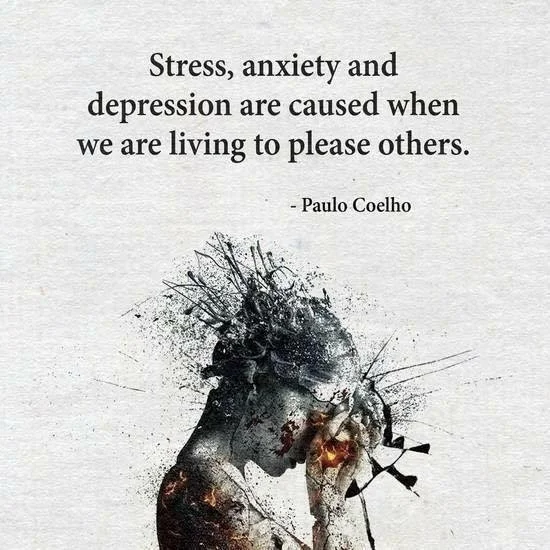
Your coworker asks you to take on extra tasks. Your friend asks for a ride home again. You're asked to join the PTA. Can you chaperone the class field trip? An acquaintance needs help moving.
Sure, you can do it! Yes. Yes. Yes. Yes. Yes. NO.
You're tired and are neglecting yourself.. You're a people pleaser. No, you say? You're not? Just nice? Being helpful? This blog title is unfathomable for you. Not something you can imagine doing.
Many people-pleasers confuse pleasing people with kindness. When discussing their reluctance to turn down someone’s request for a favor, they say things like, “I don’t want to be selfish,” or “I just want to be a good person.” Consequently, they allow others to take advantage of them.
Typically, the intense need to please and care for others is deeply rooted in either fear of rejection and/or a fear of failure. Fear of Rejection is the underlying feeling that, "if I don't do everything I can to make this person happy they might leave or stop caring for me." You hope that saying yes to everything asked of them will help you feel accepted and liked. This can come from relationships with important people in your early life rejecting or abandoning you or where the love shown was conditional. Fear of failure is the underlying feeling "If I make a mistake, I will disappoint people and/or be punished. People who had highly critical parents may develop a people-pleasing pattern. Even though these folks may not even be in your life anymore, anxiety is an emotion that can continue to live on for a long time. To quell the anxiety, we do everything we can to get things right, finish the job, and make sure everyone is happy.
Ok, ok, enough of the why, now onto WHAT CAN YOU DO??
1. Reframing for yourself what saying no means....."you as a person are entitled to your time and you need to rest and rejuvenate to be there for the people you want to help out.” Look at saying no as an opportunity to spend your time doing what you value in your life. Protect your time and energy. You’re in charge of how you spend your time. But if you are a people-pleaser, there’s a good chance your schedule is filled with activities that you think other people "want" you to do.
2. Try on the first NO for size. The first no that you state to anyone is going to be the hardest. Once you get over that first NO hurdle, you will be well on your way of getting off of the YES channel (all yesses, all the time). Also, remember point #1, that you’re saying no for good reasons. Start getting out of the people-pleasing habit by saying no to something small. Express your opinion about something simple.
3. Get over yourself. People-pleasers often worry that after they say no, the fallout will be catastrophic. It is never as bad as imagined. It’s usually a non -issue, actually. Why? Well, people are not thinking about you as much as you think. After you say NO to them, they'll move on to someone that can do it, rather than sit there thinking about how you betrayed them.
4. Realize that you can’t be everything to everyone- You're not pizza. Again, people-pleasers want to make everyone happy. While you might make someone happy temporarily, it doesn’t work long term. And you can get hurt in the process. People-pleasers must realize that the only thoughts and feelings they can change are their own.
5. #SorryNotSorry- Pay attention to when you’re apologizing and consider if you’re really at fault. Ask yourself if you’re responsible for the situation. Usually, the answer is no. You don’t have to be sorry for being you.
For some people, saying yes, being nice, and being a people-pleaser is an addiction—a habit that’s good to break.
Please, people! Let me help you sort out your wants, needs and who (Spoiler alert......Yourself) and how you really want to please.

Compassionately & Curiously Yours,
Barbie Atkinson, LPC
Be like the Palm.

What??
One of my favorite plants is the Palm Tree. I know, super cliche being Miami born and bred. I find the palm tree to be so very resilient. The next time you see a palm tree in a storm, take solace in knowing that they are likely up to the task.
Why, even, how you ask? Now, I am no botanist or dendrologist, but 1. the roots fare well in BOTH very wet and very dry soils and because of the root system it is a stable anchor. 2. In good weather their fronds spread out and make a plumage-like canopy to collect sunlight. When there are strong winds and water though? They fold up! They KNOW that with less resistance against elements they have a better chance at making it through intact. and 3. their stem isn't like the oak or pine tree where it has a cylindrical formation and can withstand compressive force (meaning it can hold the weight of the massive branches) but it is made up of a bundle approach (like cable) which allows the palm stem to BEND over through 40 or 50 degrees without snapping.
Resistance is what we do to protect ourselves from awareness of that which we fear will overwhelm us.
Strength comes in flexibility. Of mind, of body, of attitude.
How do YOU make sense of the storms of your life?
Next time, try thinking like the Palm.